
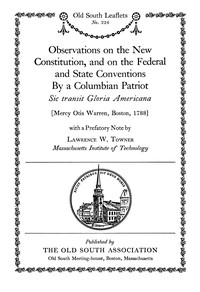
Observations on the new constitution, and on the Federal and State conventions,…
The Story
Mercy Otis Warren had a front-row seat to the American Revolution—and she wrote about it. In 1788, fresh off state debates over ratifying the Constitution, she fired off this pamphlet: a bold, no-punches-pulled argument (Observations on the new constitution…). The stage is the struggle between Federalists (who wanted a strong national government) and Anti-Federalists (Warren’s side). The high stakes? Would a newly free people simply trade King George for President King? She warns against vague governmental powers, hits hard about the missing Bill of Rights (it came later!), and gripes that the President might have as much muscle as a monarch. This isn’t just legal jargon—it's a potboiler filled with fears of corruption, from the rise of a professional army to senators serving long enough to forget the common man. Imagine a neighbor pounding on your door, red-faced, waving the doc.
Why You Should Read It
Honestly, I picked this up thinking I'd get a dusty civics lesson. Instead, I got incredible, alive rhetoric. Warren writes with the fire of someone who’s fighting the last battle and the next. You can feel she’s at the back of the convention, shaking her head. It blew my mind how relevant her worries feel today—executive overreach, unelected judges with power. Moreover, it’s refreshing to read political argument from the era without the muffled “let’s all agree” fog. Warren assumes readers to be sharp, everyday citizens—which was her revolution in itself. Women featured heavily in the earliest political fights, too. That alone makes it a story rarely told around modern dinner tables.
Final Verdict
Give this a read if you: adore American history beyond flag waves, crave confronting the early fractures that never bent into simple American unity, or love lively writing from an author whose sex was used against her (yep, her political efforts got some nasty sneers from tired men). Expect to immediately join Warren's frustrating—yet oddly energizing—camp of worry about democracy's true birthpangs. A quick, crackling read for history nerds, woman of the (American) revolution, and every would-be civics hero.
This book is widely considered to be in the public domain. It serves as a testament to our shared literary heritage.
Charles Garcia
1 year agoClear, concise, and incredibly informative.





Mary Rodriguez
1 year agoSolid information without the usual fluff.