
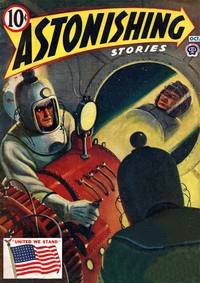
Doomsday on Ajiat by Neil R. Jones
Let's set the scene. It's the 1930s. Pulp magazines are king, and Neil R. Jones is dreaming up a future where humanity is long gone, replaced by immortal machine-men. Our guide is Professor Jameson, a 20th-century scientist whose brain now lives in a robotic body. He travels the galaxy with a crew of similar beings, the Zoromes, exploring strange new worlds.
The Story
Their latest stop is Ajiat. At first, it seems like a paradise. But they quickly learn the whole civilization lives under a shadow. For generations, the people have believed their sun is on the verge of a catastrophic explosion. This 'doomsday' prophecy dictates everything—how they live, work, and obey. The ruling class, the Scientists, maintain absolute power by managing this fear. They've even built a giant, mysterious 'Doomsday Dome.' Jameson and his metal comrades have to figure out the truth. Is the sun really about to die? Or is this an elaborate, centuries-long lie to keep the population in check? The story becomes a tense investigation, pitting unfeeling logic and advanced science against deep-rooted faith and manipulation.
Why You Should Read It
What grabbed me wasn't the ray guns or robots (though those are fun), but the core idea. Jones wrote this during the Great Depression, and you can feel it. The book is really about control through fear and what happens when an entire society is built on a promised catastrophe. Professor Jameson is a fascinating hero because he's utterly logical, a detached observer in a world ruled by emotion. Watching him try to break through the brainwashing is the best part. The plot moves fast, and the mystery of the Dome is genuinely compelling. It's not a deep character study; it's a propulsive idea rocket.
Final Verdict
This is a perfect read for fans of classic science fiction who love big concepts. Think of it as a great-grandparent to stories like 'The Matrix' or 'Logan's Run,' where the system is the villain. It's also ideal if you enjoy digging into the roots of the genre and seeing where modern tropes came from. The prose is straightforward and the action is clear, making it a quick, satisfying adventure. Just be ready for that distinct 1930s flavor—it's part of the charm. If you pick it up, you're not just reading a story; you're holding a piece of sci-fi history.
This content is free to share and distribute. Preserving history for future generations.
Emma Robinson
7 months agoIf you enjoy this genre, the flow of the text seems very fluid. A true masterpiece.
Robert Walker
5 months agoI have to admit, it creates a vivid world that you simply do not want to leave. Don't hesitate to start reading.
Kevin Lee
1 year agoI had low expectations initially, however the arguments are well-supported by credible references. This story will stay with me.
Brian Lee
2 years agoThis book was worth my time since it provides a comprehensive overview perfect for everyone. Worth every second.








Lisa Thompson
1 year agoSimply put, the pacing is just right, keeping you engaged. I would gladly recommend this title.