About 72 minutes
The Tale of Betsy Butterfly Tuck-Me-In Tales — Themes and Context
Childrens Adventures
16,499 recorded words. 1 minutes difference from this book's estimate.
View Gutenberg source #21322
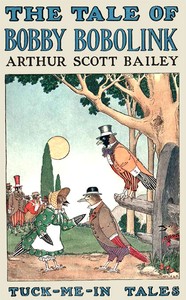
The catalog record for The Tale of Bobby Bobolink Tuck-me-In Tales — Reading Companion provides practical reading context through 16,168 words, 1 hr 11 min estimated reading time, and 2 detected text sections.
The text analysis averages about 13.0 words per sentence, while the detected sections provide another way to judge how the source is divided.
Project Gutenberg metadata also associates the work with “Animals -- Juvenile fiction,” connecting these edition facts with the source record’s subject description.
Explore this collection
These alternatives are selected using recorded categories and estimated reading time.
About 72 minutes
Childrens Adventures
16,499 recorded words. 1 minutes difference from this book's estimate.
View Gutenberg source #21322About 73 minutes
Childrens Adventures
16,778 recorded words. 2 minutes difference from this book's estimate.
View Gutenberg source #10220About 74 minutes
Childrens Adventures
16,936 recorded words. 3 minutes difference from this book's estimate.
View Gutenberg source #21836Search stored excerpts and compare books → Choose by your preferences →
Choices use stored catalog measurements. Estimates vary with reading speed. A shared category is a catalog label, not a claim that two books have the same argument or literary quality.
Search reads excerpt text stored with this catalog and links to its associated Gutenberg record. The connection is stored in the site database; this tool does not recheck that every excerpt is word-for-word identical to that external record. Excerpt search does not cover every chapter and does not verify historical publication dates.
Catalog snapshot checked: 2026-09-26. Coverage: 91 public books, 91 available source excerpts.
Calculated from edition completeness, EPUB availability, text structure and catalogue metadata. Not a user rating.
Total of 100 points, scaled to a 2.5-5.0 range. Editions with an empty description or a missing EPUB file are not scored.
Public-domain source text
The source text is kept in the dedicated reader, separate from this catalogue record and its commentary.
The opening chapter of The Tale of Bobby Bobolink introduces Pleasant Valley on May Day, where feathered residents anxiously await an unnamed arrival. Rusty Wren, Jolly Robin, little Mr. Chippy, and Mr. Blackbird trade inquiries about whether the expected bird has been seen or heard. Mr. Meadowlark flies to a swamp to ask a Red-winged Blackbird, who predicts a week's delay due to a backward season. The dialogue reveals a community unified by anticipation, with Mr. Meadowlark confessing that no other songster can carol so joyfully as the awaited Bobby Bobolink.
The first chapter establishes a collective expectation among Pleasant Valley's birds. Their conversation, rendered in short, direct exchanges, conveys individual personalities: Mr. Blackbird teases little Mr. Chippy, while Mr. Meadowlark sighs over his own singing compared to Bobby's. The Red-winged Blackbird's cautious remark about the season being backward grounds the dialogue in natural observation. This opening avoids direct description of Bobby, instead building his reputation through the neighbors' eagerness. The repeated question—"Have you seen him?"—and the varied responses create a sense of shared waiting that defines the community's social fabric.
Later chapters shift focus to Bobby's family life. When Mrs. Bobolink notices her husband's unusual jolliness, she worries something is wrong. Bobby reveals the cause: haying time has come, and Farmer Green's mowing machine threatens their nest. The dialogue between the couple shows a practical partnership: Mrs. Bobolink insists on a good reason before moving, and Bobby explains the danger from both the mower and Henry Hawk. Their decision to wait until the children can fly well enough demonstrates a careful, logical approach to parenting. The mowing machine's "clackety-clack" becomes a plot trigger, forcing a hurried relocation.
An earlier episode involves Mr. Catbird attempting to mock Bobby's song, producing a noise that frightens Mrs. Bobolink. Bobby quickly identifies the trick, reassuring his wife and calling Mr. Catbird out of hiding. The catbird apologizes, claiming something is wrong with his voice and mentioning a visit to Aunt Polly Woodchuck, the herb doctor. Bobby laughs off the incident, stating that nobody can imitate his songs except another Bobolink. This scene highlights Bobby's quick perception and good humor, while also illustrating the social rules of the bird community—mockery is attempted but resolved with apology and humor.
Readers attentive to the catalog subjects will notice that while "friendship" and "animals" broadly apply, the excerpts emphasize community anticipation, family decision-making, and practical threats like haying equipment. The bird society operates with clear hierarchies and conversational norms, and Bobby's role as a joyful singer is established through others' remarks rather than his own performances. The incomplete text leaves questions about how the move resolves and what other adventures follow, but the existing chapters offer a self-contained portrait of a small, vocal world.
I’ve often thought that Bobby Bobolink’s cheerful songs, mistaken by all the wrong birds, echo in young Bobby’s northern quiet—both carry a simple joy that lands oddly, yet settles softly. That old tale of Pleasant Valley keeps a secret handshake with Bobby of the Labrador — Text and Context, two wilderness hearts humming alone, yet somehow together.
Answer a few questions and save a private reflection on this device.









