About 229 minutes
The Rover Boys at School; Or, The Cadets of Putnam Hall — Key Ideas to Explore
School Stories
52,491 recorded words. 0 minutes difference from this book's estimate.
View Gutenberg source #5780
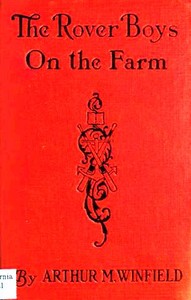
This digital edition of The Rover Boys on the Farm; or, Last Days at Putnam Hall — Text and Context is described by source-level measurements including 52,529 words, 3 hr 49 min estimated reading time, and 7 detected text sections.
The text analysis averages about 12.6 words per sentence, while the detected sections provide another way to judge how the source is divided.
Project Gutenberg metadata also associates the work with “Schools -- Juvenile fiction,” connecting these edition facts with the source record’s subject description.
Explore this collection
These alternatives are selected using recorded categories and estimated reading time.
About 229 minutes
School Stories
52,491 recorded words. 0 minutes difference from this book's estimate.
View Gutenberg source #5780About 229 minutes
School Stories
52,464 recorded words. 0 minutes difference from this book's estimate.
View Gutenberg source #11062About 244 minutes
School Stories
55,990 recorded words. 15 minutes difference from this book's estimate.
View Gutenberg source #2086Search stored excerpts and compare books → Choose by your preferences →
Choices use stored catalog measurements. Estimates vary with reading speed. A shared category is a catalog label, not a claim that two books have the same argument or literary quality.
Search reads excerpt text stored with this catalog and links to its associated Gutenberg record. The connection is stored in the site database; this tool does not recheck that every excerpt is word-for-word identical to that external record. Excerpt search does not cover every chapter and does not verify historical publication dates.
Catalog snapshot checked: 2026-09-26. Coverage: 91 public books, 91 available source excerpts.
Calculated from edition completeness, EPUB availability, text structure and catalogue metadata. Not a user rating.
Total of 100 points, scaled to a 2.5-5.0 range. Editions with an empty description or a missing EPUB file are not scored.
Public-domain source text
The source text is kept in the dedicated reader, separate from this catalogue record and its commentary.
The twelfth volume in the Rover Boys series shifts its setting between the rural farm and the familiar grounds of Putnam Hall, as promised in the preface. The narrative structure alternates between these two locales, creating a rhythm of domestic stability and schoolboy mischief. Stratemeyer employs recurring images of snakes—both real and stuffed—as a central plot device, linking the farm's natural world to the school's artificial displays. The chapters are short and action-driven, often ending with a question or a sudden event to maintain momentum.
The story moves deliberately between the Rover farm and Putnam Hall, each location carrying distinct associations. The farm chapters (e.g., “At the Farm,” “Last Days on the Farm”) emphasize family routines and outdoor labor, while the school chapters (e.g., “Jolly Old Schoolmates,” “A Stirring Scene in the Schoolroom”) focus on pranks and rivalries. This alternation is not merely scenic; it structures the plot by introducing problems in one setting that are resolved in the other. For instance, the snake incident originates at the school but its aftermath involves the farm during the holidays. The preface explicitly notes this shift “back to the farm and to dear old Putnam Hall,” confirming the deliberate design.
Snakes appear in multiple forms: a live, possibly poisonous reptile smuggled into the school; a stuffed specimen from the laboratory; and a toy or joke snake mentioned by other cadets. This repetition creates a motif of hidden danger and deception. The live snake, purchased by Tad Sobber for five dollars, is described as “from Central America and poisonous,” though sick. The stuffed snake is later used by the Rover boys to retaliate. The image recurs in dialogue (“A snake! Ugh, it makes me creep”) and in Tom Rover’s mock ode. The snake thus functions both as a literal threat and as a symbol of the escalating prank war between the Rovers and the bullies.
The chapters are structured to sustain reader interest across installments, a hallmark of Stratemeyer’s serialized approach. Many chapters end with a question or a sudden revelation: “What is that?” asks Pell as a rustling sound is heard; “Have you a plan to get square?” asks Larry, prompting a cliffhanger. The chapter titles themselves often pose questions (“What Happened on the Mountain?” “A Mysterious Cave”) or promise action (“A Stirring Scene in the Schoolroom”). This technique, common in boys’ adventure series, encourages continuous reading and mirrors the episodic nature of the narrative.
Stratemeyer differentiates characters through distinct speech patterns. Tom Rover uses playful rhymes and sarcasm (“A hissing, gliding snake / Kept all the school awake”), while Hans, a German-accented character, speaks in dialect (“Of dot Sobber fellow peen guilty he ought to be hung up on der pottom of der sea”). The bully Tad Sobber speaks in short, evasive sentences (“Oh, no, of course not”) that reveal his guilt. These vocal tics are consistent and help readers track the large cast without extensive description. The dialogue often carries the plot forward, with plans hatched and conflicts escalated through conversation rather than narration.
Readers approaching this volume should note its reliance on familiar series conventions: a clear moral hierarchy, rapid scene changes, and a focus on collective action among the Rover brothers. The farm setting offers a contrast to the school’s regimentation, but both locations serve as arenas for the same core conflicts of loyalty and mischief. The snake motif, while prominent, is one of several recurring elements that reward attention to detail across the series.
Reading about the Rover Boys moving between farm and school, with snakes stuffed in desks, I remembered the long summers at my uncle’s place, where every shed promised some harmless mischief. That same breathless escape—earthbound yet restless—came back with those young millionaires sailing above everything in Dick Hamilton's Airship; Or, A Young Millionaire in the Clouds — Key Ideas to Explore. Just a different ladder up, and the same longing to look down at the ordinary world.
Build a private reading journal entry for this title.