About 164 minutes
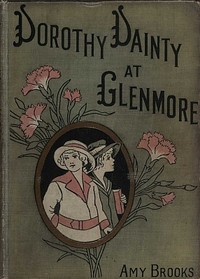
Dorothy Dainty at Glenmore — Themes and Context
School Stories
37,551 recorded words. 2 minutes difference from this book's estimate.
View Gutenberg source #7479

The source record for Phyllis, a twin — Edition Insights measures this digital text at 37,977 words, 2 hr 46 min estimated reading time, and 6 detected text sections.
The text analysis averages about 13.7 words per sentence, while the detected sections provide another way to judge how the source is divided.
Project Gutenberg metadata also associates the work with “Schools -- Juvenile fiction,” connecting these edition facts with the source record’s subject description.
Explore this collection
These alternatives are selected using recorded categories and estimated reading time.
About 164 minutes
School Stories
37,551 recorded words. 2 minutes difference from this book's estimate.
View Gutenberg source #7479About 202 minutes
School Stories
46,409 recorded words. 36 minutes difference from this book's estimate.
View Gutenberg source #2273About 229 minutes
School Stories
52,491 recorded words. 63 minutes difference from this book's estimate.
View Gutenberg source #5780Search stored excerpts and compare books → Choose by your preferences →
Choices use stored catalog measurements. Estimates vary with reading speed. A shared category is a catalog label, not a claim that two books have the same argument or literary quality.
Search reads excerpt text stored with this catalog and links to its associated Gutenberg record. The connection is stored in the site database; this tool does not recheck that every excerpt is word-for-word identical to that external record. Excerpt search does not cover every chapter and does not verify historical publication dates.
Catalog snapshot checked: 2026-09-26. Coverage: 91 public books, 91 available source excerpts.
Calculated from edition completeness, EPUB availability, text structure and catalogue metadata. Not a user rating.
Total of 100 points, scaled to a 2.5-5.0 range. Editions with an empty description or a missing EPUB file are not scored.
Public-domain source text
The source text is kept in the dedicated reader, separate from this catalogue record and its commentary.
The opening chapter of Phyllis, a twin immediately establishes a tension between perfection and anxiety. Phyllis Page stands in a room described as “as nearly perfect as a room could be,” yet she is disappointed because “there isn't one single thing more to do.” Her worry that her twin sister Janet might not like the room—despite its pink and white paper, ivory bed, and pink roses—reveals a central concern: the gap between outward order and inner uncertainty. The narrative voice, through Auntie Mogs, calls Phyllis a “little goose,” but the reader senses that Phyllis’s concern is not trivial. This early scene sets up a pattern of contrasts—city versus country, modern versus old-fashioned, and the twins’ differing tastes—that will drive the story.
The excerpts repeatedly play with the idea of twinship as both a bond and a source of confusion. At the masquerade ball, Phyllis deliberately lets Sir Galahad (Chuck) mistake her for Janet, speaking in a voice that is “not at all natural” and enjoying the deception. When Chuck finally sees both twins together, he blinks, and Howard exclaims “Golly.” The scene hinges on the twins’ physical likeness, but also on their different behaviors: Phyllis teases, while Janet presumably would not. The text suggests that identity is not fixed by appearance alone; voice, manner, and choice all matter. The chapter title “Chuck Guesses Right” implies that the guessing game is central to the plot, and the twins’ ability to swap roles tests the perceptions of those around them.
Phyllis’s worry about Janet’s room highlights a contrast between their backgrounds. Phyllis describes Janet’s own room as having a “big four-posted bed and those ducky rag rugs,” suggesting a more rustic, perhaps country or old-fashioned style. In contrast, Phyllis’s room in a house “just off Fifth Avenue” is modern, delicate, and meticulously arranged. The autumn day outside is “glorious” with “red leaves” and “sparkling” water, but inside, Phyllis frets over whether her sister will feel at home. This tension between the sisters’ environments may reflect broader differences in their personalities—Phyllis seems more urban and polished, while Janet is implied to be simpler or more traditional. The narrative does not resolve this contrast in the excerpts, leaving it as a source of potential conflict or growth.
The dialogue in the excerpts reveals character through tone and word choice. Phyllis uses playful, teasing language: “I am Queen Mab,” she whispers, and later shrugs “daintily.” Chuck, by contrast, is direct and sometimes cross, saying “Don't be silly” and “oh, very well” huffily. Daphne is introduced with a “familiar drawl,” and Jerry pleads, “Ah, go on, give a fellow a chance.” These vocal mannerisms distinguish characters quickly. The narrator also notes that Phyllis’s voice is “not at all natural” when she impersonates Janet, implying that each twin has a characteristic way of speaking. The text thus uses dialogue not just to advance plot but to build a world where identity is performed and perceived through speech.
Readers may find it useful to pay attention to the moments when the twins are not together—these scenes often reveal their individual motivations and fears. The masquerade chapter, in particular, rewards close reading of who speaks and how, since the confusion depends on subtle cues. The story’s interest in appearance versus reality extends beyond the twins to the setting itself: New York in autumn is described with vivid sensory detail, but the characters’ inner lives are often at odds with the golden sunshine. This tension between surface and substance is a thread worth following.
I keep thinking about how Phyllis and Janet’s mix-ups weren’t really about confusion, but about the quiet ache of being seen as someone else. That feeling lingers, the way belonging isn’t always loud. It reminded me of The Dozen from Lakerim — Background and Themes, where friendship works like a shared secret—nothing flashy, just a steady warmth that stays with you long after the last page turns.
Build a private reading journal entry for this title.