About 166 minutes
Phyllis, a twin — Edition Insights
School Stories
37,977 recorded words. 2 minutes difference from this book's estimate.
View Gutenberg source #22912
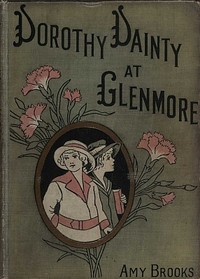
Dorothy Dainty at Glenmore — Themes and Context can be approached with a clearer sense of reading commitment from its source measurements: 37,551 words, 2 hr 44 min estimated reading time, and 5 detected text sections.
The text analysis averages about 16.7 words per sentence, while the detected sections provide another way to judge how the source is divided.
Project Gutenberg metadata also associates the work with “Friendship -- Juvenile fiction,” connecting these edition facts with the source record’s subject description.
Explore this collection
These alternatives are selected using recorded categories and estimated reading time.
About 166 minutes
School Stories
37,977 recorded words. 2 minutes difference from this book's estimate.
View Gutenberg source #22912About 202 minutes
School Stories
46,409 recorded words. 38 minutes difference from this book's estimate.
View Gutenberg source #2273About 229 minutes
School Stories
52,491 recorded words. 65 minutes difference from this book's estimate.
View Gutenberg source #5780Search stored excerpts and compare books → Choose by your preferences →
Choices use stored catalog measurements. Estimates vary with reading speed. A shared category is a catalog label, not a claim that two books have the same argument or literary quality.
Search reads excerpt text stored with this catalog and links to its associated Gutenberg record. The connection is stored in the site database; this tool does not recheck that every excerpt is word-for-word identical to that external record. Excerpt search does not cover every chapter and does not verify historical publication dates.
Catalog snapshot checked: 2026-09-26. Coverage: 91 public books, 91 available source excerpts.
Calculated from edition completeness, EPUB availability, text structure and catalogue metadata. Not a user rating.
Total of 100 points, scaled to a 2.5-5.0 range. Editions with an empty description or a missing EPUB file are not scored.
Public-domain source text
The source text is kept in the dedicated reader, separate from this catalogue record and its commentary.
The novel opens with Dorothy and Nancy reacting to an unspecified new event that feels "like a dream," a phrase repeated to emphasize their disbelief. Brooks establishes a contrast between the Stone House's familiar gardens and the unknown ahead, using short, breathless sentences to mirror Dorothy's excitement. The narrative voice is warm but brisk, moving quickly from description to dialogue.
Brooks builds tension through rapid exchanges, as when Patricia overhears Nancy's fear of a man resembling Bonfanti. The eavesdropping scene is paced with short lines: "I wish you'd talk," says Arabella, while Patricia "needed to hear no more." The dialogue accelerates as Patricia later confronts Nancy in the hall, asking about the "big, dark man." Nancy's pale reaction and Dorothy's protective gesture are described in a single sentence, compressing the emotional impact. The revelation that the man is a florist named Jonathan Scroggs defuses the suspense abruptly, a pattern where Brooks raises stakes through talk and resolves them through explanation.
Brooks uses repeated phrases to define characters. Patricia "never could resist the temptation to listen," and she "never seemed to know that in striving to annoy others, she was constantly proving that she herself was disagreeable." This double "never" underscores her fixed nature. Nancy's speech is marked by exclamations: "wildly happy," "Good gracious!" and "I'd not dare to go out for days." Dorothy's voice is calmer, often repeating Nancy's words to reassure: "But, Nancy dear, we've not seen him since that day." The author's third-person narration occasionally slips into a knowing tone, as when noting "It was strange what pleasure it afforded Patricia to make others unhappy."
The boarding school setting provides both cozy interiors and threatening exteriors. The "cheery reception-hall" is a space for gossip, while the forest edge and windows become sites of fear. Brooks contrasts the safe "apartment" of Mrs. Marvin with the hallway where Patricia listens. The sleigh-ride, mentioned as a past event, introduces the mysterious man, and the "cloudy afternoon" mirrors Arabella's boredom. The resolution comes indoors, with Mrs. Marvin laughing off the threat, shifting the mood from Gothic to domestic. The setting thus drives the plot: Patricia's eavesdropping occurs because Dorothy's door is "slightly ajar," a small detail that triggers the central misunderstanding.
Readers may note how Brooks balances the series' expected cheerfulness with moments of genuine unease. The florist subplot is resolved quickly, but the pattern of overheard conversations and misinterpreted sightings recurs. Pay attention to how the author uses the boarding school's communal spaces—halls, reception rooms—to stage conflicts that are resolved not through action but through talk. This emphasis on dialogue over incident shapes the novel's gentle, character-driven pace.
There is a particular hush in Dorothy Dainty at Glenmore, that suspended moment before a misunderstanding blooms. I find that same quiet tension, the whir of anticipation, in Tom Swift and His Motor-Boat; Or, The Rivals of Lake Carlopa — Reading Companion. Both hold a boy’s or girl’s breath, waiting for the water to still.
Save your reaction, strongest insight, and memorable passage.