About 390 minutes
A Pirate of the Caribbees — A Reader’s Guide
Childrens Adventures
89,575 recorded words. 13 minutes difference from this book's estimate.
View Gutenberg source #21073
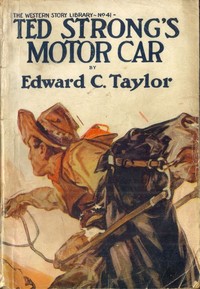
For Ted Strong's Motor Car Or, Fast and Furious — Edition Insights, the stored edition analysis reports 92,639 words, 6 hr 43 min estimated reading time, and 12 detected text sections.
The text analysis averages about 14.4 words per sentence, while the detected sections provide another way to judge how the source is divided.
Project Gutenberg metadata also associates the work with “Western stories,” connecting these edition facts with the source record’s subject description.
Explore this collection
These alternatives are selected using recorded categories and estimated reading time.
About 390 minutes
Childrens Adventures
89,575 recorded words. 13 minutes difference from this book's estimate.
View Gutenberg source #21073About 423 minutes
Childrens Adventures
97,173 recorded words. 20 minutes difference from this book's estimate.
View Gutenberg source #23648About 436 minutes
Childrens Adventures
100,088 recorded words. 33 minutes difference from this book's estimate.
View Gutenberg source #23090Search stored excerpts and compare books → Choose by your preferences →
Choices use stored catalog measurements. Estimates vary with reading speed. A shared category is a catalog label, not a claim that two books have the same argument or literary quality.
Search reads excerpt text stored with this catalog and links to its associated Gutenberg record. The connection is stored in the site database; this tool does not recheck that every excerpt is word-for-word identical to that external record. Excerpt search does not cover every chapter and does not verify historical publication dates.
Catalog snapshot checked: 2026-09-26. Coverage: 91 public books, 91 available source excerpts.
Calculated from edition completeness, EPUB availability, text structure and catalogue metadata. Not a user rating.
Total of 100 points, scaled to a 2.5-5.0 range. Editions with an empty description or a missing EPUB file are not scored.
Public-domain source text
The source text is kept in the dedicated reader, separate from this catalogue record and its commentary.
The opening chapter of Ted Strong's Motor Car pitches the reader into a heated argument over a pig. Carl Schwartz's thick dialect—"As sheur as I standing here am, dot schwein I'm going to kill!"—and Bud Morgan's folksy retorts establish a comic, colloquial voice that dominates the early pages. The dispute over ownership of the pig's head versus its tail is both absurd and precise, revealing a world where livestock are treated as property with distinct parts. Yet this rustic banter soon gives way to a more measured narrative register when Ted Strong enters, writing letters at a table. The shift in voice is not merely a change of speaker but a deliberate modulation of pace: the fast, furious argument slows into reasoned dialogue, hinting at the dual nature of the story—part slapstick ranch comedy, part detective pursuit.
Taylor uses dialect not as mere decoration but as a tool for quick characterization and humor. Carl Schwartz's German-inflected English—"By Chiminy, I get skvare yet so soon"—marks him as the excitable immigrant, while Bud Morgan's drawl—"I'll jest bet yer a million dollars ter a piece o' custard pie yer don't"—identifies him as the laconic cowboy. The pig dispute is a miniature drama of ownership and absurd logic: Carl threatens to cut off the tail so the pig "not able to valk straight," and Bud retorts that he owns "the best part; ther head." The comedy arises from the collision of these two voices, each stubbornly logical within its own frame. The rapid-fire exchange creates a staccato rhythm, a verbal sparring match that mirrors the physical action promised later. This dialect work is consistent throughout the excerpts, suggesting that Taylor relies on vocal contrast to generate energy in scenes that otherwise might be static.
When Stella descends in the elevator, the narrative voice changes. Her speech is standard English, free of dialect markers: "Goodness, what a fine-looking addition to the family!" She renames the boy Scrub to Dick Fosdick, a moment that carries emotional weight—"There was a tear in her eye at the thought of her father." The boys grow "rather solemn," and the tone becomes reflective. This shift is not just a change in speaker but a modulation of pace: the rapid-fire banter of the opening yields to a slower, more sentimental register. Stella's presence introduces a domestic, almost feminine sensibility into the masculine ranch world. The scene also marks a transition from the ranch setting to the train journey, where the narrative will blend western adventure with the new technology of the motor car. The elevator itself—an anachronistic detail in a ranch house—signals that this story is not a pure western but a hybrid, mixing frontier tropes with modern conveniences.
Taylor varies the pace by alternating between descriptive passages and action sequences. In the train scene, the narrative slows to describe the car Orizaba, the stateroom, and the tourists' reactions to the broncho boys. The pace is leisurely, almost ethnographic: "they received a great deal of attention, which was not particularly to Ted's liking." Then, abruptly, the focus narrows to Little Dick Fosdick's inner world: "He worshiped Stella, admired Ted, and looked upon Bud as the greatest pal a boy ever had." This interiority is a pause, a moment of stillness before the next plot turn. The motor car itself, sent on by express, is introduced as both a tool and a "clew"—a word that signals the detective plot. The car promises speed, but its actual appearance is deferred, creating anticipation. Taylor manages the reader's expectations by controlling the flow of information: the car is mentioned, then set aside, while the narrative lingers on character and setting before accelerating into action.
Readers will find that Ted Strong's Motor Car rewards attention to its vocal texture. The shifts between dialect comedy, sentimental reflection, and brisk narration are not accidental but orchestrated. Pay particular notice to how Taylor uses the motor car not just as a plot device but as a symbol of changing pace—both within the story and in the broader transition from the old West to a new, mechanized one. The book's subtitle, "Fast and Furious," applies as much to its narrative rhythm as to its action.
I’ve been thinking about how Ted Strong’s Motor Car shifts its gears, sliding from Bud’s noisy, laughing dialect into Ted’s quieter formality, and it reminded me of another old friend where the voice feels just as unhurried—settling into Turkey Proudfoot’s sleepiness like a warm porch swing. Both books seem to slow time, letting a single change—a motor, a nap—light up everything else. The Tale of Turkey Proudfoot Slumber-Town Tales — Text and Context holds that same gentle hush, a small world breathing softly.
Create a short personal record of your experience with this book.









