
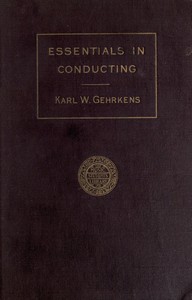
Essentials in Conducting by Karl Wilson Gehrkens
Forget everything you think you know about a conductor just keeping time. Karl Wilson Gehrkens's Essentials in Conducting is a classic guide that goes much deeper. Written in 1919, it comes from a time when conducting was solidifying as a modern art form, and Gehrkens wanted to define its core principles for students and professionals alike.
The Story
There isn't a plot in the traditional sense. Instead, think of the book as a journey into the conductor's mind and toolbox. Gehrkens starts with the absolute basics—how to hold a baton, fundamental beat patterns—but quickly moves to the heart of the matter. He explores how to study a score, how to rehearse an ensemble efficiently, and how to communicate musical ideas without saying a word. The 'story' is the process of building a performance, from the first rehearsal to the final concert. He covers practicalities like choosing repertoire and managing different types of groups (orchestra, band, chorus), but always ties it back to the conductor's ultimate goal: achieving a unified and expressive musical result.
Why You Should Read It
What makes this book special is its focus on the human element. Gehrkens constantly emphasizes that conducting is about leading people, not just notes on a page. He talks about the importance of inspiration, clarity, and earning the respect of your musicians. Reading it, you get a sense of the immense responsibility and artistry involved. It’s not about ego or showmanship; it's about service to the music and the ensemble. While some technical terms are used, his explanations are so straightforward that any curious music lover can follow along. You finish the book with a whole new appreciation for what happens on the podium.
Final Verdict
This is a must-read for any aspiring conductor, music education student, or dedicated amateur musician leading a group. But it's also perfect for the curious concert-goer who wants to understand the magic they see from the audience. While it's a century old, its insights into leadership, preparation, and musical communication are timeless. If you enjoy seeing how complex things work behind the scenes, you'll find this a clear and engaging guide.
This digital edition is based on a public domain text. Thank you for supporting open literature.
Donald Taylor
3 weeks agoHaving read the author's previous works, the case studies and practical examples provided add immense value. Top-tier content that deserves more recognition.
John Lopez
5 months agoGiven the current trends in this field, the logic behind each conclusion is easy to follow and verify. It cleared up a lot of the confusion I had previously.
William Jackson
1 year agoI appreciate the objective tone and the evidence-based approach.
Kimberly Thomas
8 months agoHaving followed this topic for years, I can say that the cross-referencing of different chapters makes it a great study tool. Definitely a five-star contribution to the field.







Mary Martinez
11 months agoIt’s rare to find such a well-structured narrative nowadays, the insights into future trends are particularly thought-provoking. I appreciate the effort that went into this curation.