
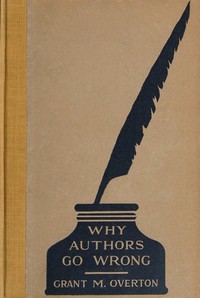
Why Authors Go Wrong, and Other Explanations by Grant M. Overton
Published in the 1920s, this isn't a novel with a plot in the traditional sense. Think of it as a series of connected essays or frank lectures from a man who's seen it all. Grant M. Overton, working from his vantage point as an editor and critic, acts as a literary detective. His case files are the manuscripts that cross his desk and the published works that confuse or disappoint him. He examines the crime scene of a poorly written book and asks: what went wrong here?
The Story
There's no single narrative thread. Instead, Overton builds his case thematically. He starts by identifying specific, common pitfalls—like authors trying to imitate a trendy style instead of finding their own voice, or getting so lost in research that they forget to tell a compelling story. He then moves beyond the 'what' to explore the psychological and practical 'why.' Why does a smart writer cling to a terrible opening chapter? Why do others ignore fundamental rules of storytelling? He argues it's often a cocktail of insecurity, misdirected ambition, and listening to the wrong people. The book is his attempt to clear the fog, offering direct, sometimes blunt, explanations and corrections.
Why You Should Read It
What's amazing is how little the core problems have changed in a century. The publishing technology is different, but the human struggles are the same. Reading this feels like getting timeless, unvarnished advice. Overton isn't a gentle cheerleader; he's the insightful friend who tells you the hard truth because he believes you can handle it. His voice is confident and clear, free of modern jargon. You won't find talk of 'brands' or 'algorithms,' just focused talk on craft, honesty, and reader connection. It's refreshing and cuts through a lot of noise. For writers, it's a potent reminder of fundamentals. For readers, it's a secret decoder ring that helps you understand what you're feeling when a book doesn't work.
Final Verdict
This is a perfect little book for curious readers who love peeking behind the scenes of how books are made, and for writers at any stage who need a bracing, honest critique of common mistakes. It's especially valuable for new writers drowning in conflicting advice; Overton's directness is a lifeline. If you enjoy the personality of old-school critics and the feeling of getting wisdom from a previous generation that still applies, you'll find this short book incredibly satisfying. It's a time capsule of publishing wisdom that, against all odds, hasn't expired.
This masterpiece is free from copyright limitations. Distribute this work to help spread literacy.
Michelle Wright
1 year agoFrom the very first page, it creates a vivid world that you simply do not want to leave. I will read more from this author.
Sandra Williams
1 year agoHelped me clear up some confusion on the topic.



Sarah Jones
8 months agoI've been looking for a reliable source on this topic, and the way it handles controversial points with balance is quite professional. I feel much more confident in my knowledge after finishing this.