
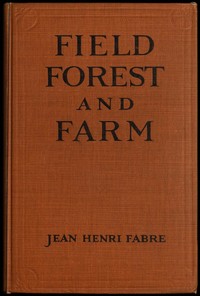
Field, Forest and Farm by Jean-Henri Fabre
Let's be clear: this isn't a novel with a plot in the usual sense. The 'story' here is the slow, patient unraveling of nature's secrets. Jean-Henri Fabre acts as our narrator and guide, leading us from his modest farmhouse in Provence, the 'Harmas', out into the surrounding countryside. Each chapter focuses on a different creature or natural phenomenon. We follow him as he tracks the hunting expeditions of the predatory wasp, witnesses the intricate masonry of solitary bees, and puzzles over the life cycle of the pine processionary caterpillar.
The Story
The narrative drive comes from Fabre's relentless curiosity. He sets up simple experiments—putting insects under glass bells, altering their environments, watching them for hours—to test his ideas about their behavior. Will the mason bee find its way home if I move its nest? Can this beetle right itself if it gets stuck on its back? The book is built from these small, intimate investigations. There's no grand climax, just a steady accumulation of 'aha!' moments as Fabre pieces together how these small lives are lived. The setting itself is a character: the sun-baked field, the shady forest, and the cultivated farm provide different stages for these daily dramas.
Why You Should Read It
You should read this because Fabre makes the familiar world utterly strange and wonderful again. His writing isn't cold or clinical. He gets frustrated when experiments fail, he marvels at simple elegance, and he shares his failures as openly as his successes. He respects his subjects, even the ones that might make us squeamish. Reading him, you start to see intelligence and purpose in places you never looked before. The themes are timeless: patience, observation, and the profound satisfaction of understanding something for yourself. In our age of quick answers, Fabre is a reminder of the deep joy found in slow, careful looking.
Final Verdict
This book is perfect for anyone with a spark of curiosity about the natural world, whether you're a gardener, a hiker, or just someone who glances out the window. It's for readers who enjoyed the gentle observation of 'The Secret Life of Trees' or the personal essays of Annie Dillard. If you think bugs are creepy, Fabre might just change your mind. It's not a fast read; it's a book to savor in small doses, letting each chapter reset your vision of the world outside. Keep it on your porch or bedside table for a daily dose of quiet wonder.
There are no legal restrictions on this material. Enjoy reading and sharing without restrictions.







Melissa Young
1 year agoNot bad at all.